Starship enterprise
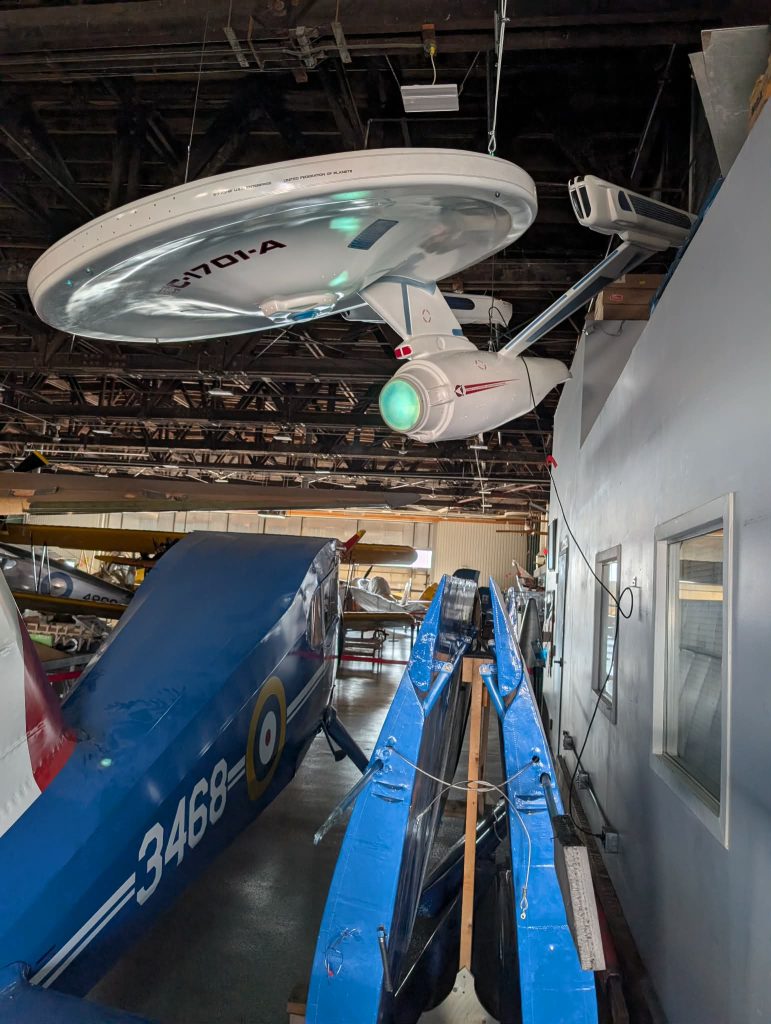
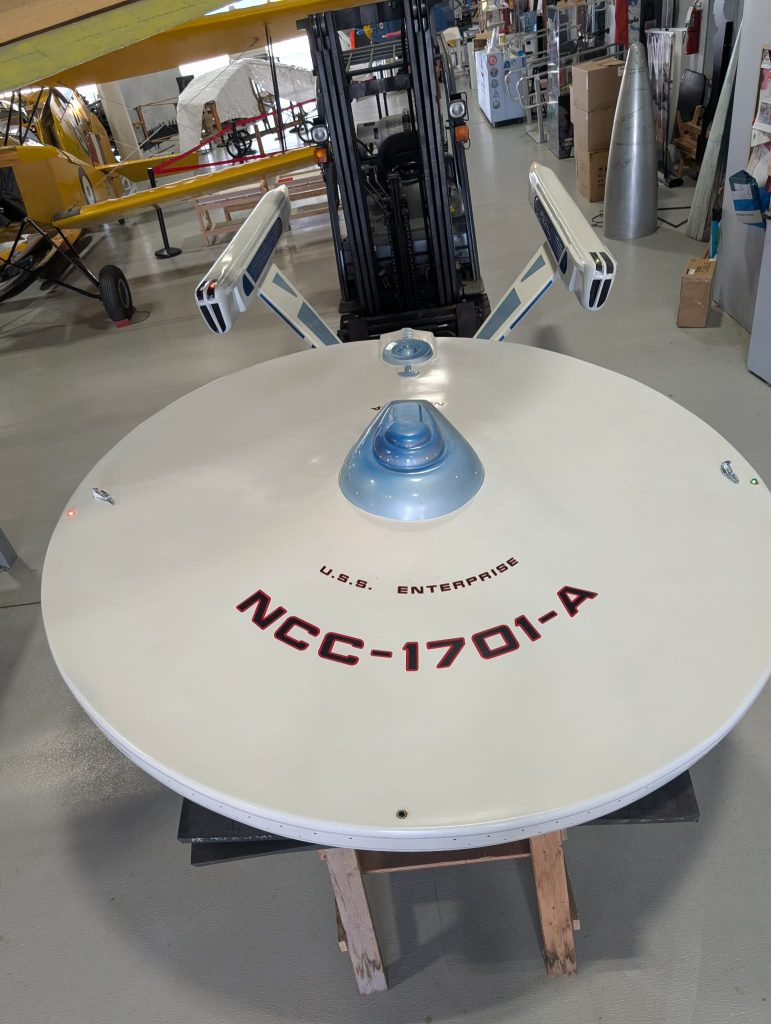
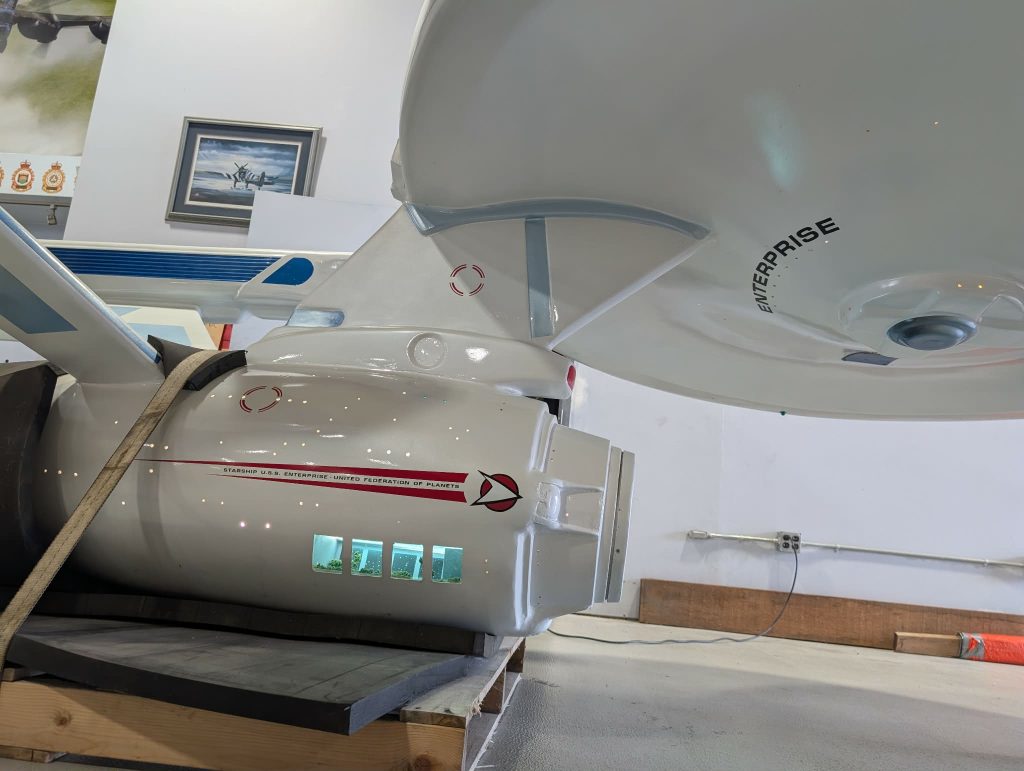
Enterprise Model Details
|
Hull Diameter: |
2.75 m 9 feet |
|
Length: |
3 m 16 feet |
|
Weight |
115 kg 250 lbs |
|
Composition: |
Fiberglass molded over softwood skeleton |
|
Lighting: |
Originally fluorescent, replaced with LED strip lighting to reduce weight |
History
The iconic Enterprise is the most recognizable fictional space ship in popular culture. Beginning as far back as 1966, Star Trek generated several television series, a dozen movies, countless novels, cartoons, comic books and merchandising. Because of this, there is no doubt that Star Trek and by default, the Starship Enterprise, have inspired many
to pursue an interest, passion,obsession and even a career in aviation and aerospace.
This Enterprise model, NCC-1701-A which made its
first movie appearance at the end of Star Trek IV:
The Voyage Home, was one of a handful built under licence for Paramount Pictures by an uncredited third-party fabricator for distribution to various movie theatre franchises across North
America.
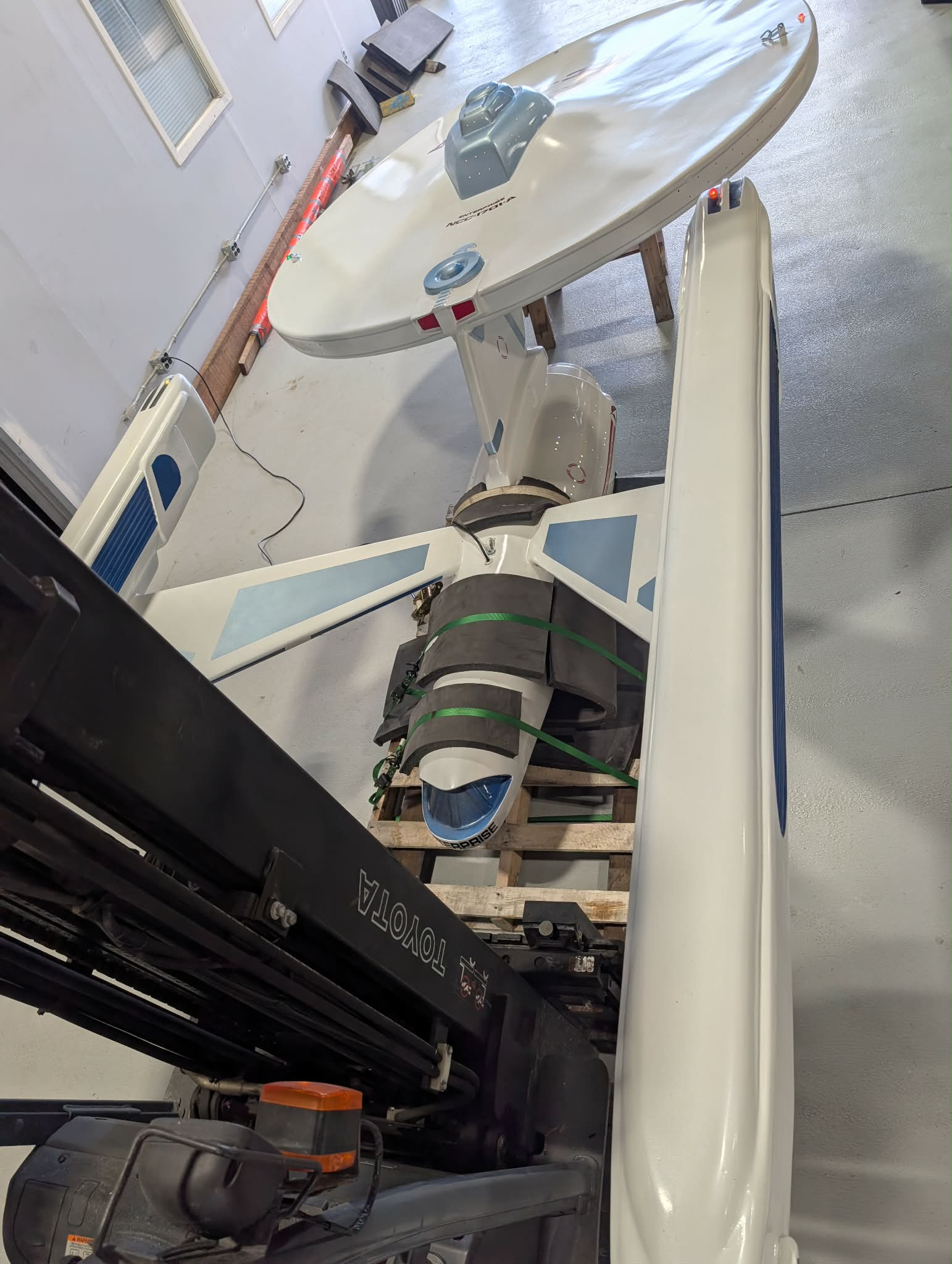
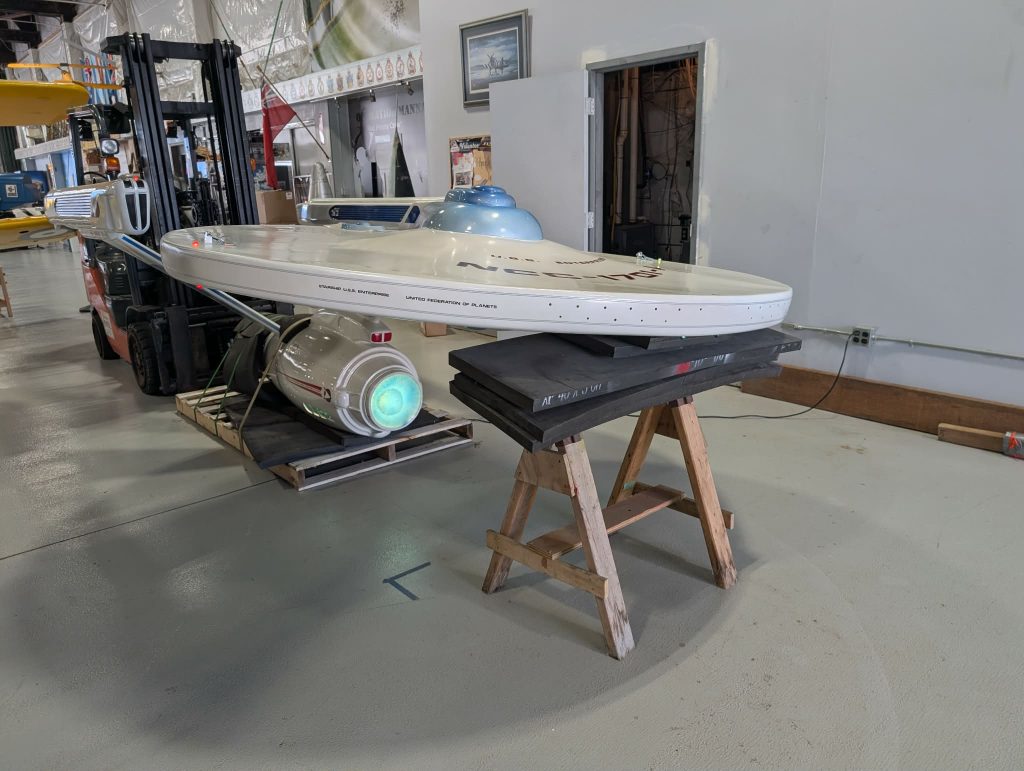
History of The Enterprise Model on Display
- This particular model along with several was located nearby at
the former Silver City Theatre site at Walker and
Provincial Roads in Windsor, Ontario. Silver City
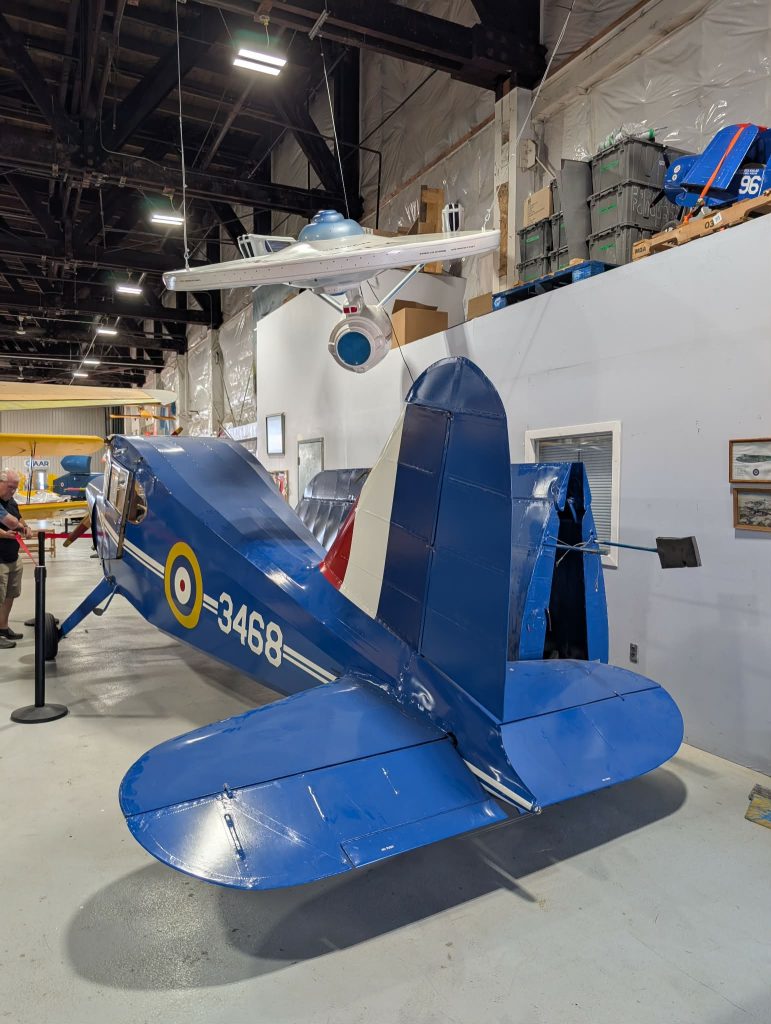
closed in February, 2022. - The Canadian Aviation Museum acquired the Enterprise and
the F-14 at that time through the efforts of several
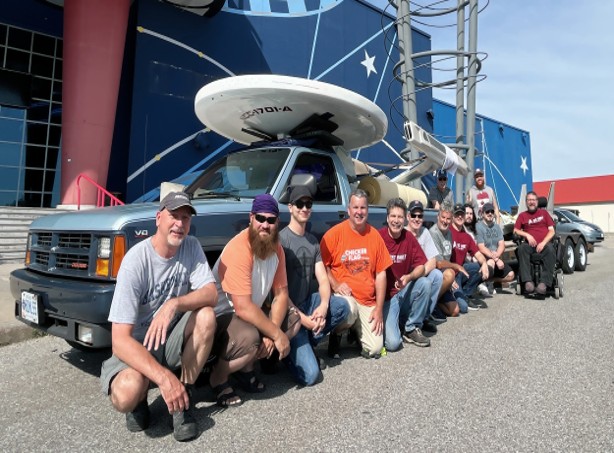
volunteer “Trekkers”. - Restoration took several months to clean, replace
lighting and restore paint and decals.
Inspirational
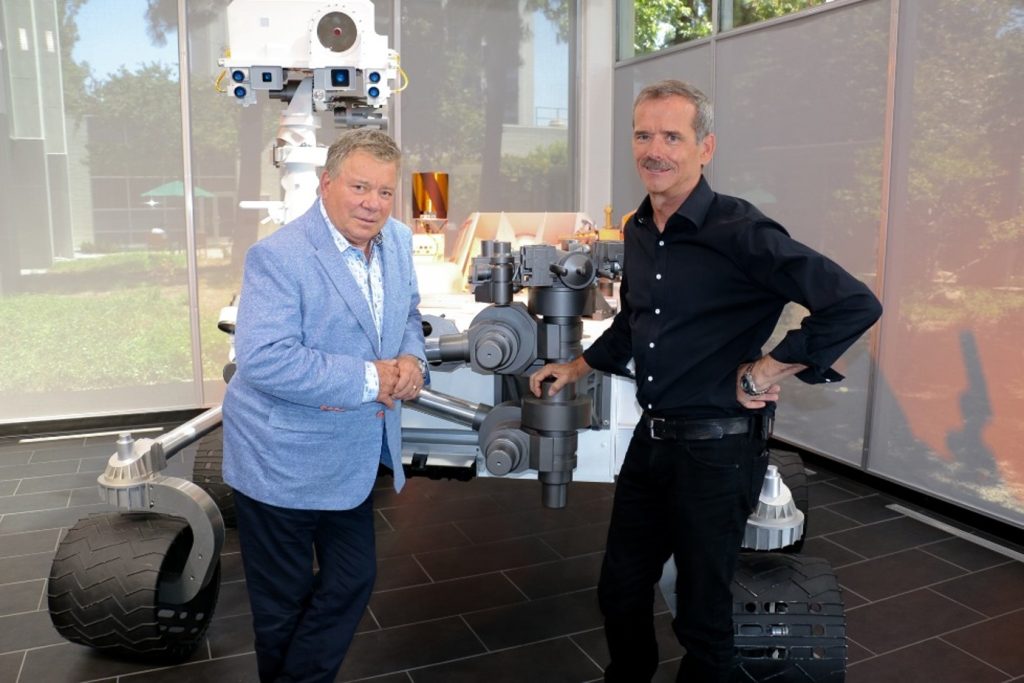
“Watching Star Trek opened my mind to the endless possibilities of people and the universe, and helped give me permission to dream of a life of space travel. It was an important part of the bedrock supporting the decisions that led to my life as an astronaut.”
— Chris A. Hadfield, Colonel, Astronaut ret’d
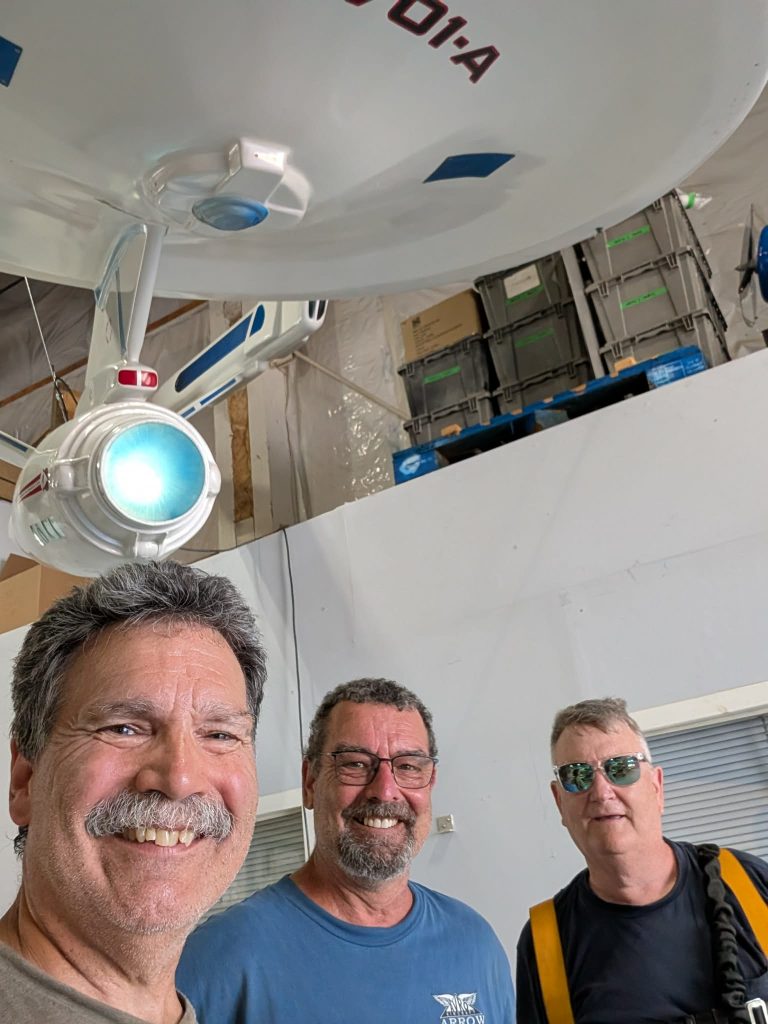
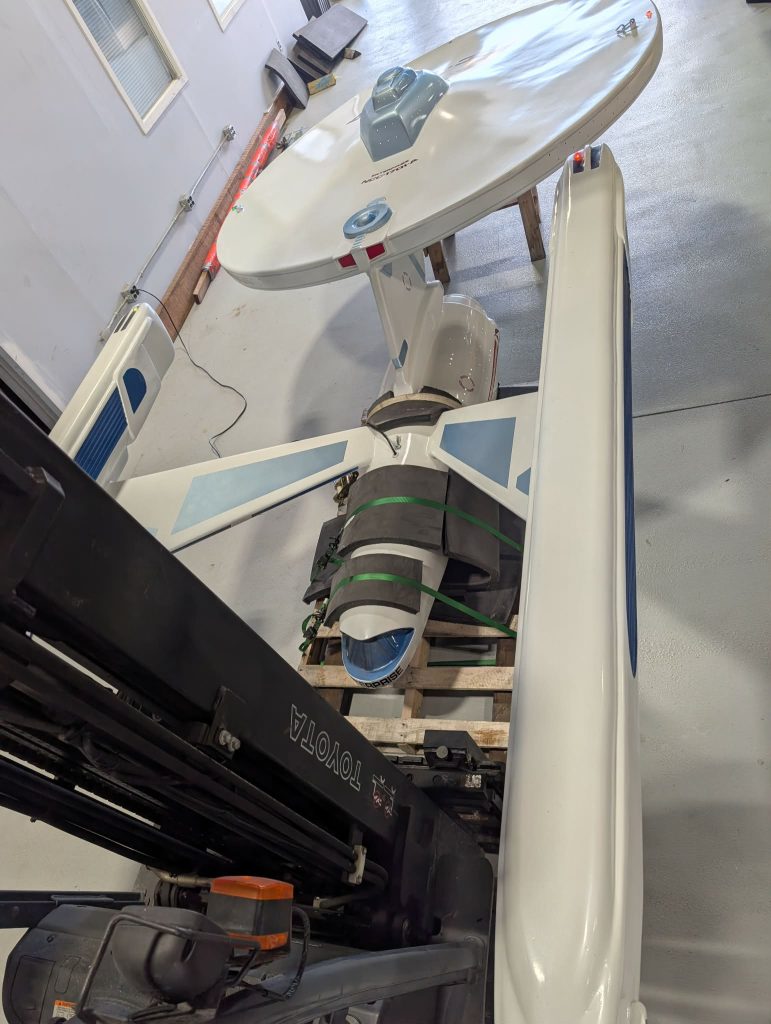
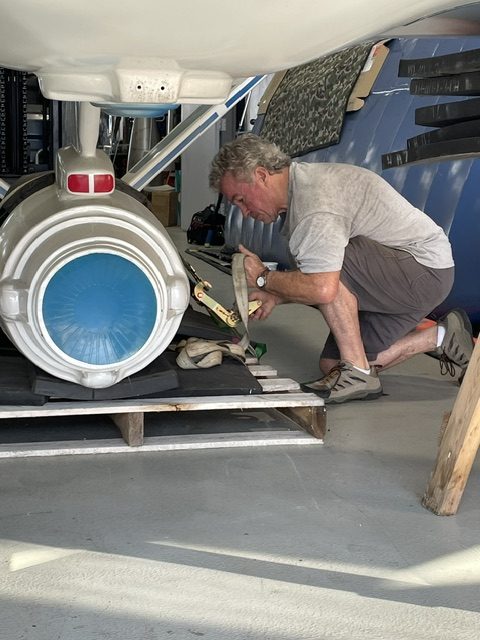
Transportation and Installation
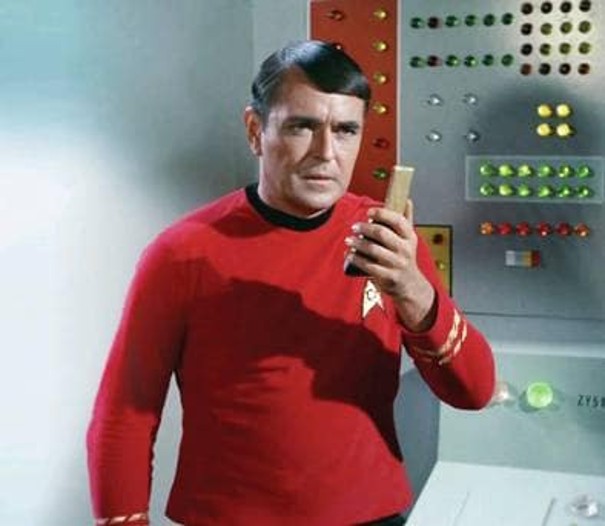
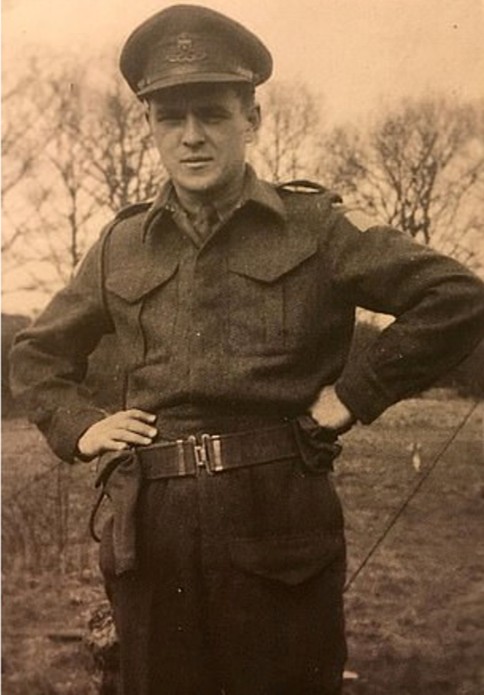
James Doohan “Scotty”
Before he became the most famous Scottish character on television, Lt. James Doohan served in the Canadian Army during the Second World War.
Born March 3, 1920 in Vancouver, BC to Irish immigrant parents, Doohan’s family later moved to Sarnia, ON in his early teens. In 1939 he enlisted at the age of twenty as a gunner in the Royal Canadian Artillery (RCA).
Doohan earned his place among the 22nd Field Battery, 13th Field Regiment RCA of the Canadian 3rd Infantry Division. After rising through the ranks to sergeant, he won a place at an Officer Training School, becoming a lieutenant in 1940, and was placed in charge of an entire battery of field guns. He was eventually sent to train in Britain in preparation for Operation Overlord.
His first experience in battle came early in the morning on June 6, 1944 in and around the fishing town Courseulles-sur-Mer.
After landing at H+20 on the Mike sector in support of the Royal Winnipeg Rifles and Canadian Scottish, Doohan and his fellow CPOs (Command Post Officers) were pinned down for a short time on the beach by enemy machine gun fire as they struggled to establish firing positions. Once the beach had been secured Doohan’s battery advanced to a concentration area near Banville where the CPO’s met their respective troops and led them to their new gun positions. There they established defensive positions for the night.
That evening, Doohan was hit by machine-gun fire when returning to his command post after enjoying a cigarette. Four rounds hit his leg, one passed through his right middle finger and one hit him in the chest, deflecting off the lucky cigarette case given to him by his brother. Later, his right middle finger would have to be amputated, an injury he would often conceal on-screen throughout his career.
After convalescing in England, he graduated as an air observation pilot and flew Taylorcraft Auster Mark V aircraft for 666 Squadron, RCAF. Although 666 Squadron RCAF was not sent into combat, the unit was stationed in Apeldoorn, Holland through the summer of 1945 to conduct “air taxi” duties. Doohan was once labeled the “craziest pilot in the Canadian Air Force” when in the late spring of 1945, on Salisbury Plain north of Andover, he flew an Auster Mark IV between two telegraph poles just “to prove it could be done”.
During his service, Doohan often mingled with Scottish troops. He became particularly friendly with some from Aberdeen, and later said this is what inspired Montgomery Scott’s accent. He recalled, “I decided to give Scotty an Aberdeen accent, which was something I had learned when I was sent over to England during the war. While I was there, I met this fellow from Aberdeen; and I couldn’t understand one word he said! But I did learn that accent from him and that was the one I used for Scotty.”
After the war, he moved to London, ON where he worked in radio as a voice actor. By 1946, he had earned several roles on the CBC. In his post-war years, it’s estimated that he performed in over 4,000 radio shows and 450 television programs.
Having developed a talent for accents while working in radio, Doohan auditioned for the role of a yet-unnamed Chief Engineer for a show called Star Trek in 1965. During his audition, having tried a number of accents for his character, including German and Italian, the show’s creator Gene Roddenberry asked which he preferred. Doohan replied: “if you want an engineer, in my experience the best engineers are Scotsmen.” James would name the character Montgomery Scott in honor of his grandfather.
Over several generations, many fans have been inspired by Doohan’s character Mr. Scott, among them astronaut Neil Armstrong. Of his experience in the war, Doohan wrote: “I was twenty-four… and if the Germans had been marginally better shots, I wouldn’t have seen twenty-five.”