AVRO CANADA CF-105 ARROW
Aircraft Details
Aircraft Specifications
Length: 77 ft 9 in (23.70 m)
Wingspan: 50 ft (15 m)
Height: 21 ft 2 in (6.45 m)
Empty Weight: 49,040 lb (22,244 kg)
Gross Weight: 56,920 lb (25,818 kg)
Crew: 2
Speed: 1,136 knots (1,307 mph, 2,104 km/h)
@ 50,000 ft (15,000 m)
Mach: Mach1.98 Demonstrated
Mach: Mach 2+ Potential
Range: 261 nm (300 mi, 483 km) (Combat)
Service Ceiling: 53,000 ft (16,000 m).
Aircraft Description
Here’s a bullet-point history of the Avro Arrow:
- Early 1950s: Origins and Threat Assessment
- Following the Korean War and rising Cold War tensions, the Royal Canadian Air Force (RCAF) sought a new, advanced all-weather jet interceptor to counter the perceived threat of Soviet long-range bombers attacking North America over the Arctic.
- A.V. Roe Canada Limited (Avro Canada) was commissioned for the project, building on their experience with Canada’s first all-weather jet interceptor, the CF-100 Canuck.
- 1953: Design Studies Begin
- Research and design for the CF-105 (later named “Arrow”) supersonic interceptor commenced. The design aimed for exceptionally high performance.
- 1954-1955: Development and Production Go-Ahead
- Formal production and testing began.
- The project incorporated innovative technologies, including a fly-by-wire control system and a computerized control system.
- Extensive testing was undertaken, including wind tunnel tests and launches of 1/8 scale models over Lake Ontario.
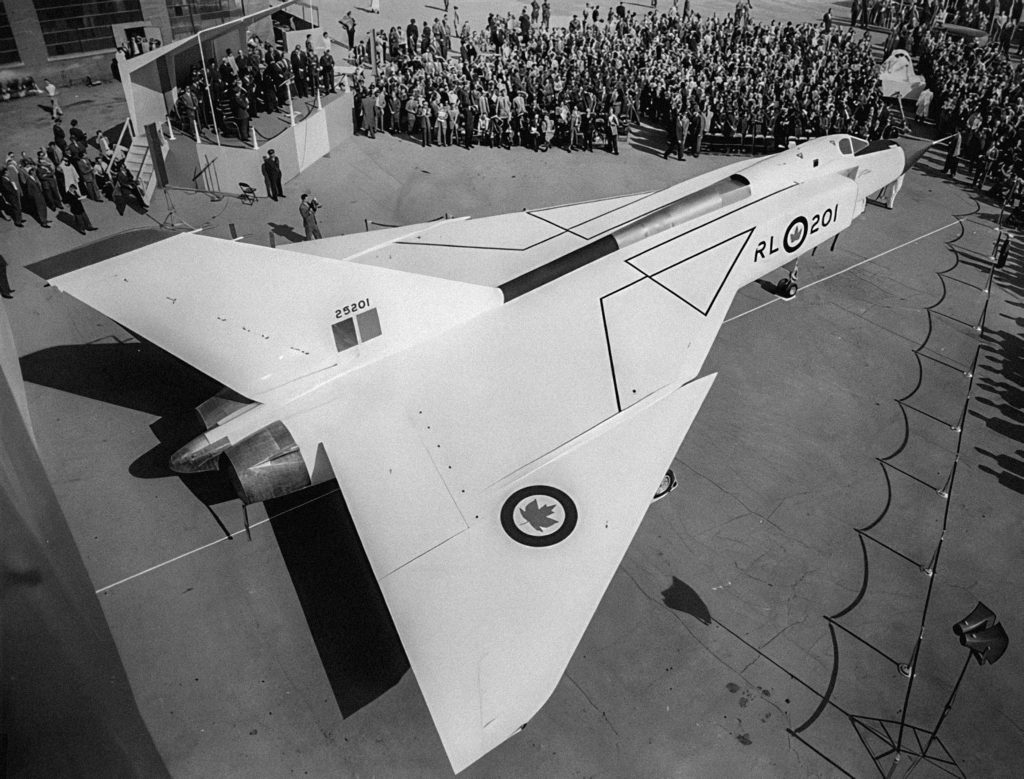
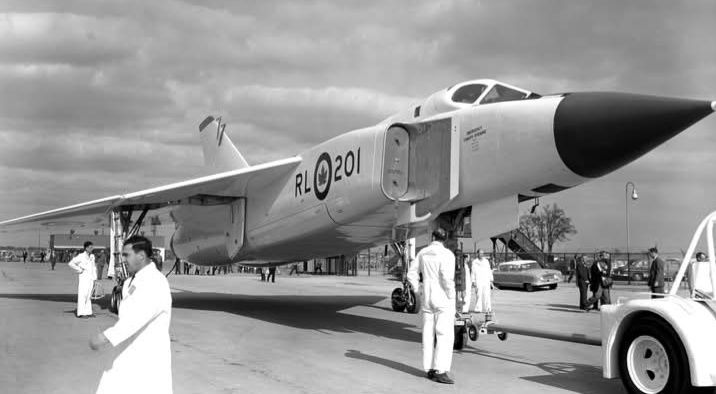
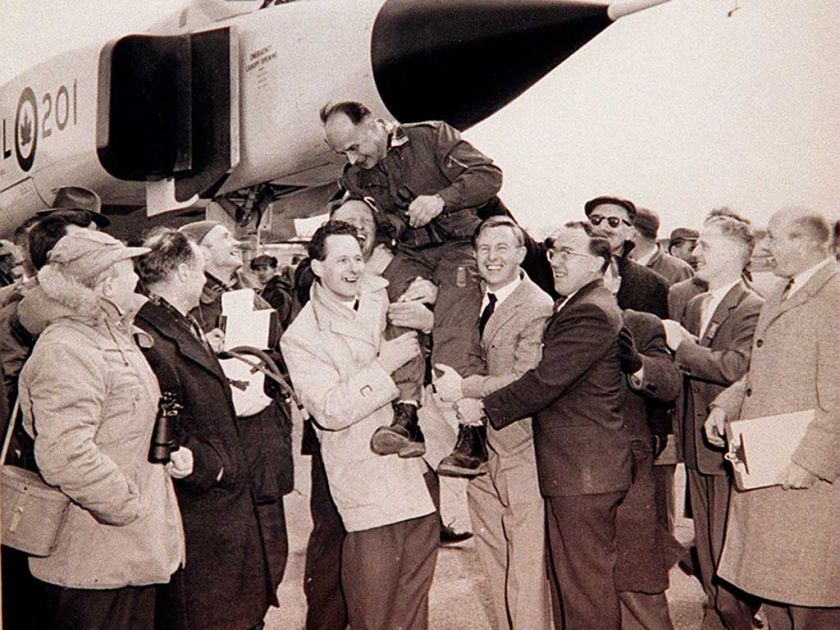
- October 4, 1957: Roll-out of the First Arrow (RL-201)
- The first Avro Arrow prototype, RL-201, was publicly unveiled to great fanfare in Malton, Ontario, on the same day the Soviet Union launched Sputnik 1. It was hailed as a symbol of Canadian ingenuity.
- March 25, 1958: First Test Flight
- RL-201, piloted by Avro’s Chief Developmental Test Pilot Janusz “Zura” Zurakowski, completed its successful maiden flight.
- The Arrow quickly demonstrated excellent handling and performance, reaching speeds just under Mach 2 in level flight.
- 1958-Early 1959: Continued Testing and Cost Escalation
- Four more Mark I Arrows (RL-202, RL-203, RL-204, RL-205) were completed and joined the flight testing program, powered by Pratt & Whitney J75 engines.
- A Mark II Arrow, RL-206, was nearing completion and intended to be fitted with the more powerful Orenda Iroquois engine, expected to break world flight speed and altitude records.
- Despite its technical successes, the project faced significant cost overruns.
- February 20, 1959: “Black Friday” – Cancellation
- Prime Minister John Diefenbaker’s Progressive Conservative government abruptly cancelled the Avro Arrow and the Iroquois engine programs.
- The primary stated reasons were the escalating costs (around $470 million total development) and a perceived shift in the Cold War threat from manned bombers to intercontinental ballistic missiles (ICBMs), making an interceptor like the Arrow less relevant.
- The decision sparked widespread outrage and led to the immediate layoff of over 29,000 workers, a significant blow to Canada’s aerospace industry.
- Post-Cancellation: Destruction and Legacy
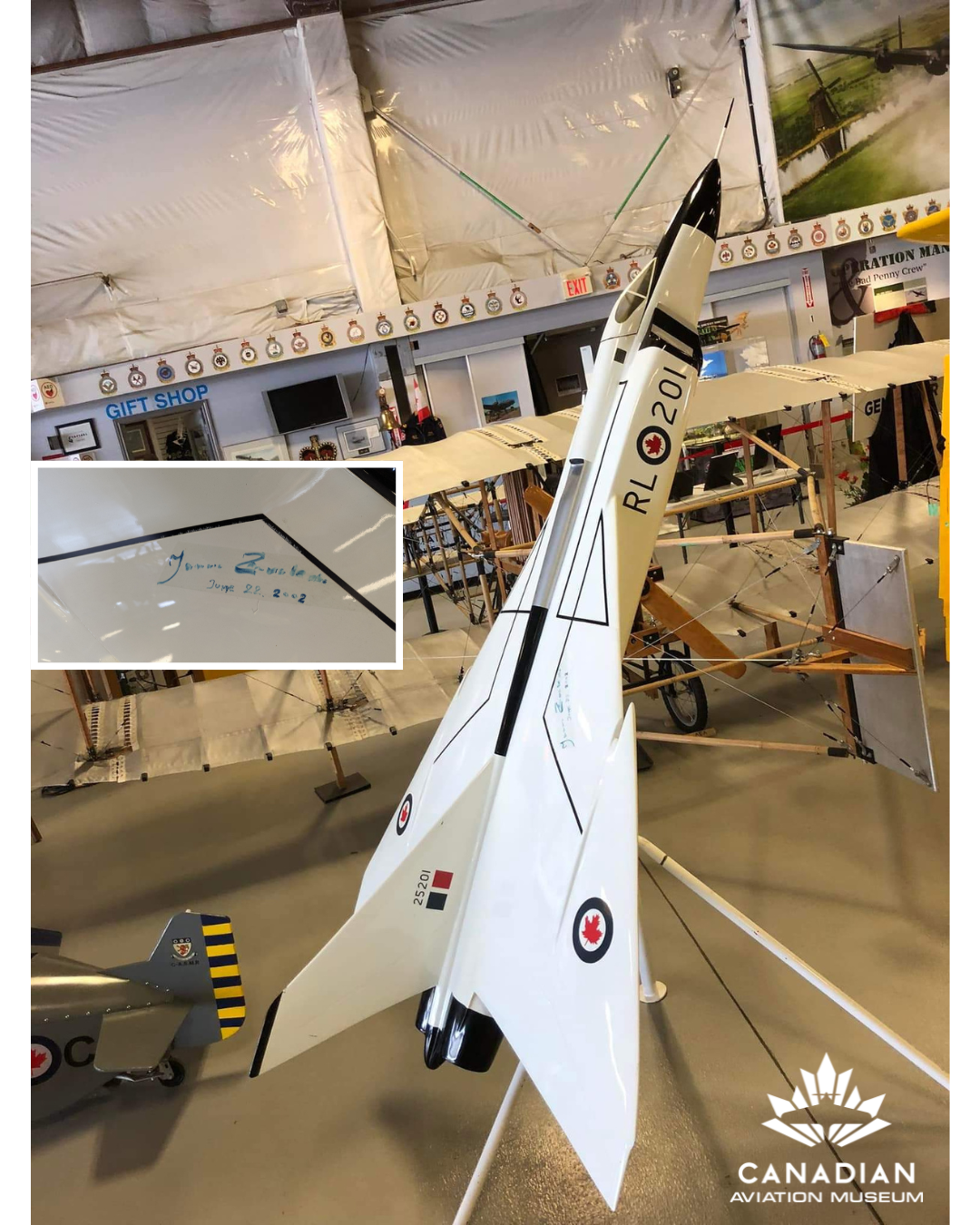
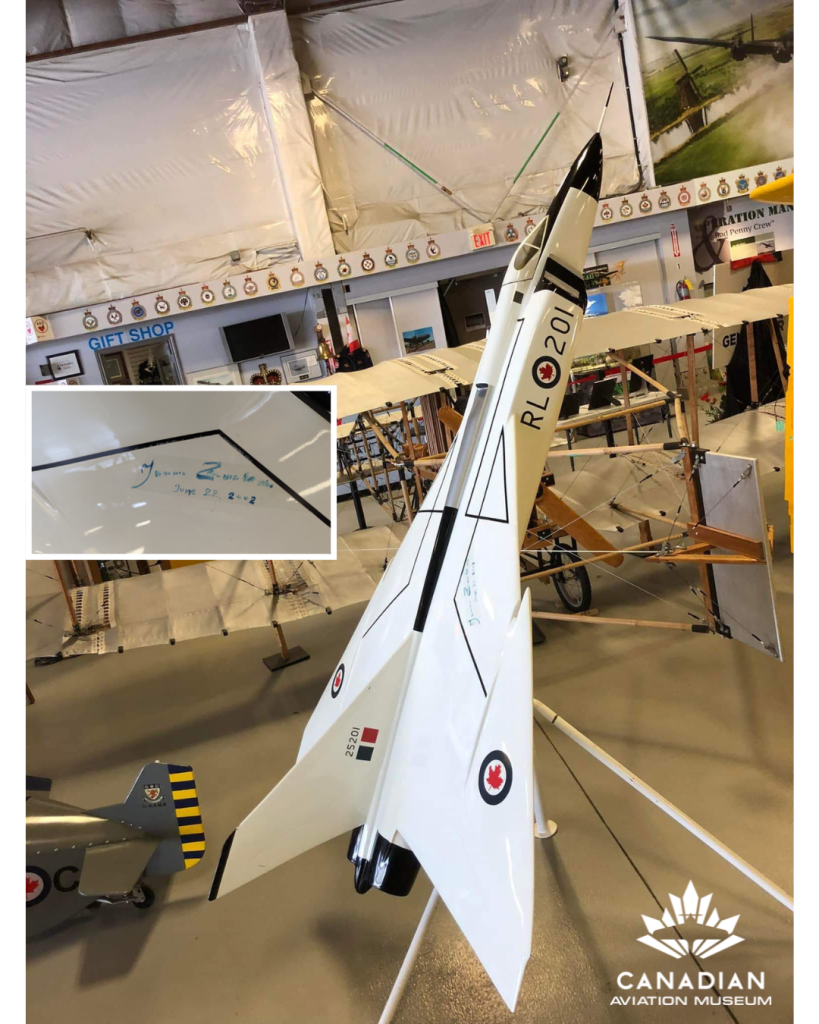
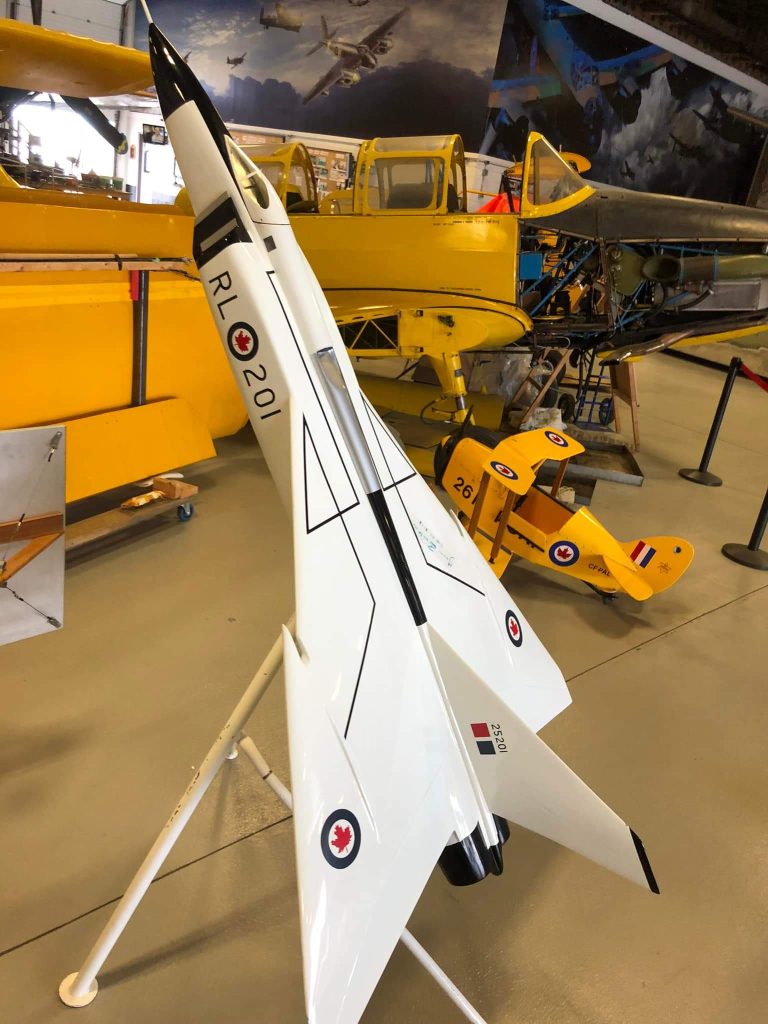
Our Display Model at the Museum
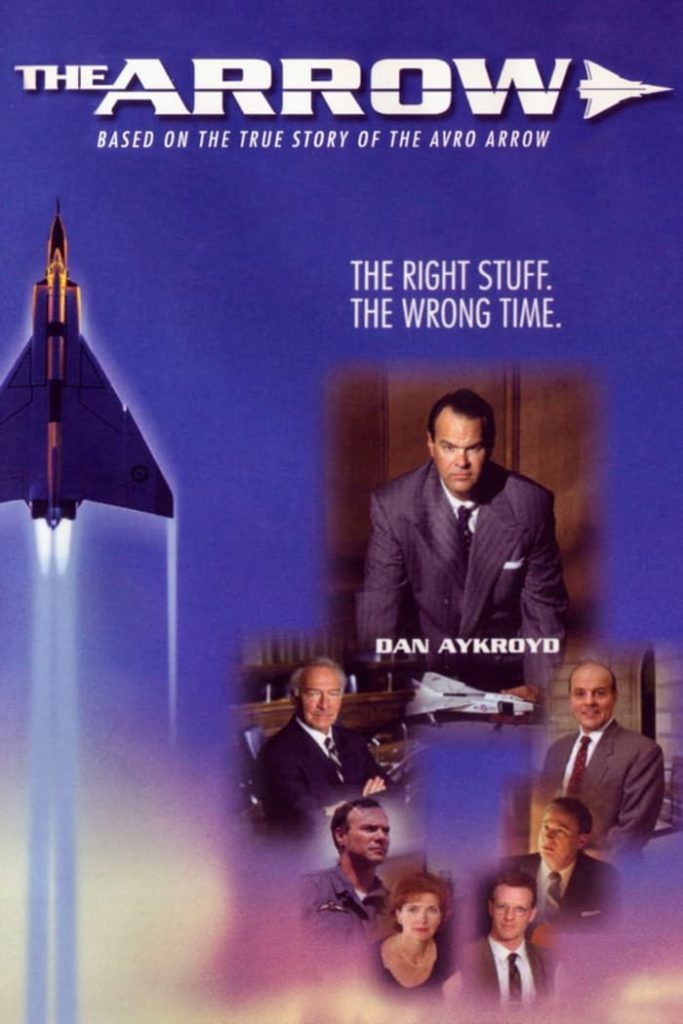
- In 1997, the CBC (Canadian Broadcasting Corporation) produced a mini-series about the CF-105 aircraft titled ‘The Arrow’ starring Dan Akroyd.
- The model you see before you was one of the original filming models used in the production of this film and was generously donated by a member of our museum who wishes to remain anonymous.
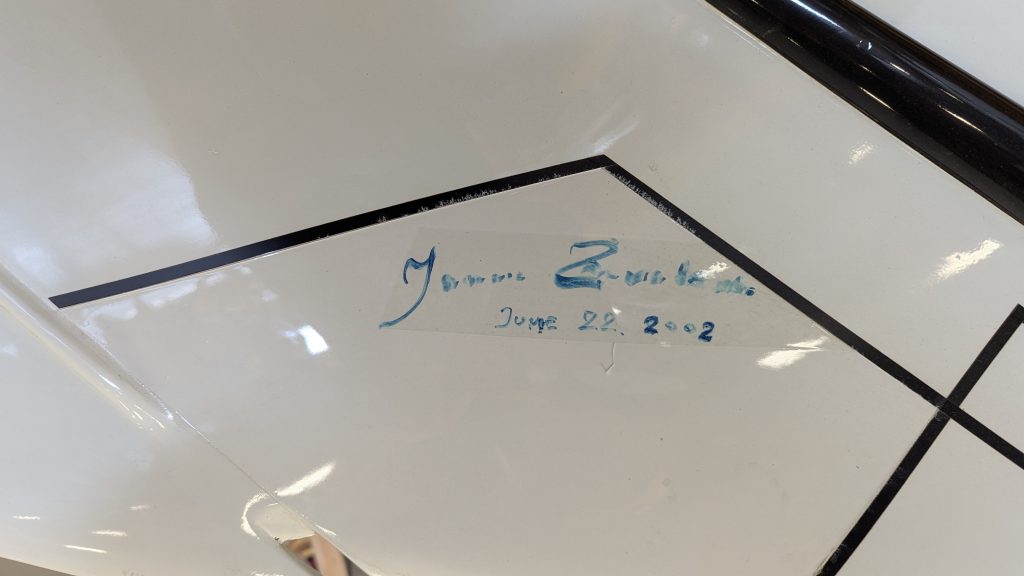
- This model on display is personally signed by famed Avro Arrow Test Pilot Jan Zurakowski.
Interesting Links
Stanley H. Galezowski, the Avro Arrow, and his connection to Windsor.
Find out more about Avro and the NASA Canadians here.