
de Havilland Canada DHC-1 Chipmunk
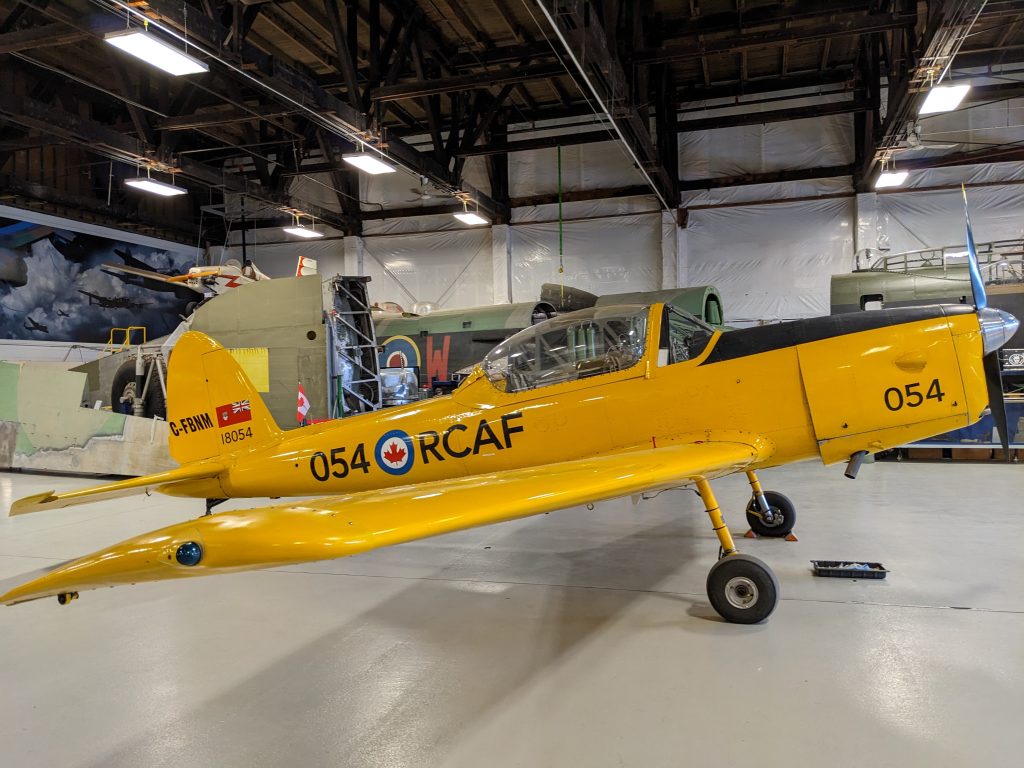
Aircraft Specifications
Length: …………………………………………………25 ft. 5in. (7.75 m)
Wingspan: …………………………………………34 ft. 4in. (10.47 m)
Height: …………………………………………………………….7 ft. (2.1 m)
Empty Weight: ……………………………………1517 lbs. (646 kg)
Gross Weight: ……………………………………..2100 lbs. (953 kg)
Crew: ………………………………………….2 (Student + Instructor)
Cruise Speed: ……………………………………………………..90 Knots
Range: …………………………………………………..225 nm (445 km)
Service Ceiling: ………………………………..15,800 ft. (5200 m)
Powerplant: ……..1 x De Havilland Gypsy Major Engine
……………………………………………………………….145 HP 4 cylinder
Aircraft Description
- Standard primary trainer used by the RCAF through much of the post WWII years. Ours are 1950 models.
- The deHavilland Chipmunk was the first true postwar aviation project of deHavillland Canada
- Replacement for deHavilland Tiger Moth trainer
- Over 500 in airworthy condition today.
- Metal construction with fabric on flying surfaces
- CF-DIO-X, the chipmunk prototype, flew for the first time at Downsview, Toronto on May 22 1946
- The production version of the airplane was powered by a 145 hp (108 KW) in-line de Havilland Gypsy Major 8 engine
- Quirky fact…..The Gypsy Major engine is converted from a tractor engine and mounted upside down to allow the propeller to clear the ground when operating.
- Chippies (Chipmunks) served actively from 1948 until 1971
- The de Havilland plant at Downsview built 217 aircraft, the last in 1956
- From 1950’s onwards, the Chipmunk also became a popular civilian aircraft, being used for training, aerobatics, and crop spraying. (most civilian aircraft are ex-military)
‘Peril Yellow’ was the colour of all training aircraft. (clearly identifies student pilot…give room – Common with all commonwealth trainers)

